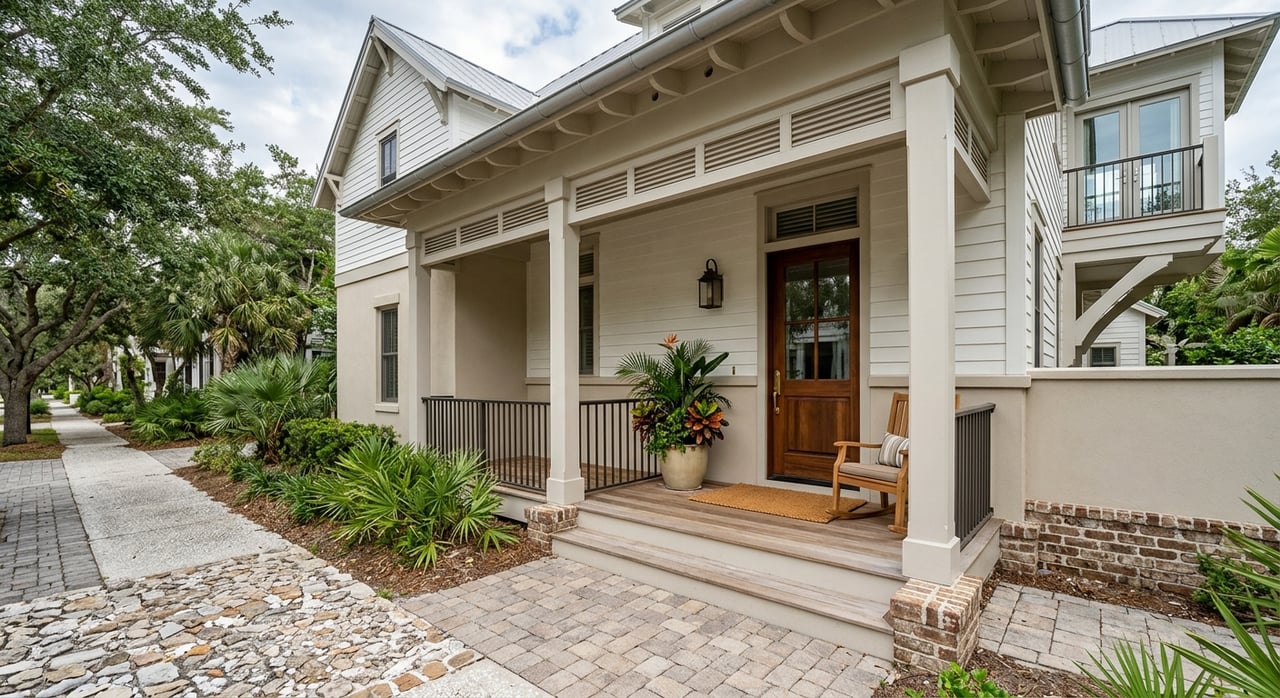
If you are hoping for a more walkable lifestyle in Melbourne, you are not imagining it. While Melbourne is not uniformly set up as a park-everywhere-and-walk city, there are a few standout pockets where local dining, waterfront views, public spaces, and everyday conveniences come together in a way that feels easy and connected. If you are exploring a move, planning a visit, or simply trying to understand how different parts of the city live day to day, this guide will help you spot where walkability shows up best. Let’s dive in.
Where walkability stands out in Melbourne
In Melbourne, walkability tends to be district-based rather than citywide. The strongest examples in local sources are Historic Downtown Melbourne and the Eau Gallie Arts District, often called EGAD.
These areas work well on foot because they combine short blocks, dining and retail destinations, waterfront access, and public improvements like sidewalks, crosswalks, lighting, benches, and parking. That creates a more natural park-once-and-walk routine than you will usually find in more spread-out parts of the city.
Historic Downtown Melbourne
Historic Downtown Melbourne is one of the clearest examples of a walkable area in the city. According to the district’s Main Street organization, it covers about one square mile and is pedestrian-friendly, with stroller-friendly sidewalks and marked crosswalks.
For many people, what makes downtown feel walkable is not just the layout. It is the concentration of places you can actually use in one outing. The district reports more than 40 restaurants and bars, five art galleries, 16 large-scale murals, and two historic theaters: the Henegar Center for the Arts and Melbourne Civic Theatre.
What you can do on foot downtown
Downtown Melbourne gives you a mix of activity and atmosphere. You can grab a meal, browse public art, catch a show, and take in water views without needing to keep moving your car.
The waterfront also adds to the experience. Downtown sits on the Indian River Lagoon and Crane Creek, and the district highlights Crane Creek Promenade and the Melbourne Causeway as walking, jogging, and biking routes. Front Street Park and Melbourne Harbor Marina add more public, water-adjacent amenities.
Why parking helps walkability
A walkable district feels even better when parking is simple. In Downtown Melbourne, the City of Melbourne offers free public parking in multiple lots and in the City Hall garage, including no time limit on floors 2 through 5 of the garage.
There is also on-street parking along New Haven Avenue and around City Hall. For anyone coming in from another part of Brevard, that ease of parking can make downtown feel more accessible and less stressful than many people expect.
Eau Gallie Arts District
If you want a walkable area with an arts-forward, riverfront feel, EGAD deserves a close look. The district is an accredited Florida Main Street program, and its materials describe it as south Brevard’s oldest riverfront community.
What stands out here is the mix. EGAD is not only a place for galleries and events. It also includes shops, restaurants, service providers, offices, and historic sites, which helps support a more practical day-to-day walking environment.
What makes EGAD feel connected
City improvements have helped strengthen the district’s walkability over time. The City of Melbourne notes work including construction and improvements to Eau Gallie Square, reconstruction of Eau Gallie Pier, installation of a sidewalk along Eau Gallie Boulevard, and added benches and wayfinding signs.
Current priorities also include lighting, public parking infrastructure, and Pineapple Avenue Complete Street crosswalk work. Those kinds of upgrades matter because they make walking feel more comfortable, visible, and intentional.
A key stop: Eau Gallie Square
Eau Gallie Square is one of the most useful walkable gathering points in the district. The city describes it as a small park with oak trees, palms, paved brick walkways, benches, a lighted amphitheater, and electricity.
Located at Highland Avenue and Eau Gallie Boulevard, it functions as both a place to pause and a simple landmark within the district. If you are trying to picture the rhythm of the area, this is one of the spots that helps it click.
Riverfront places worth walking
Some of Melbourne’s best walking experiences are tied to the water. The city park system spans more than 232 acres, and many parks include hike-and-bike trails, pavilions, gazebos, playgrounds, and other recreation features.
For walkable lifestyle appeal, a few riverfront spots stand out in the city’s materials. These places help show why Melbourne’s most enjoyable walking routes are often connected to scenic public spaces rather than only retail corridors.
Top riverfront walking spots
- Crane Creek Promenade for a downtown waterfront route
- Melbourne Causeway for walking, jogging, and biking
- Claude Edge Front St. Park for river views and public access
- Riverview Park for waterfront open space and a non-motorized boat launch
- Promenade Park as part of the riverfront park network
- Eau Gallie Pier for a walkable destination in EGAD
The city also notes fishing piers at Claude Edge Front St. Park and Eau Gallie Pier. Front Street Civic Center, located on the Indian River, adds outdoor grounds and a gazebo, reinforcing that these waterfront areas are built not just for passing through, but for spending time.
Can you live walkably in Melbourne?
The honest answer is yes, but in specific pockets. Melbourne as a whole is still more spread out, so a fully walkable lifestyle depends a lot on where you live and what kind of routine you want.
The strongest fit for that lifestyle is near compact, mixed-use areas like Downtown Melbourne and EGAD. Local planning materials for Downtown Melbourne describe a moderate-density mixed-use area with multi-story buildings, retail and residential development, and expansion intended to support mixed-use commercial, arts, and residential space.
That matters if you are house hunting with lifestyle in mind. Rather than thinking only in terms of square footage or commute time, it may help to ask whether you want quick access to restaurants, events, public parks, and waterfront walking routes as part of your regular routine.
What walkability means for buyers
If you are relocating to Melbourne, walkability can shape how a neighborhood feels day to day. In the city’s more walkable pockets, you may be able to enjoy a simpler routine with dining, arts, parks, and local events closer together.
That does not mean every need will be handled on foot. It does mean certain areas offer a more connected lifestyle, especially if you enjoy being able to park once, stroll to dinner, spend time by the water, and make an evening out of it.
For buyers, this is often less about checking a single box and more about matching a home search to your habits. If waterfront access, public spaces, and a more active street experience matter to you, these districts are worth a closer look.
What to notice when touring walkable areas
When you visit these parts of Melbourne, pay attention to how the area functions, not just how it looks. A place may feel charming for an hour, but your real question is whether it supports the routine you want.
Here are a few things to notice as you walk:
- How easy it is to move between shops, parks, and restaurants
- Whether sidewalks and crosswalks feel clear and comfortable
- How close public gathering spaces are to daily destinations
- Whether parking feels convenient for you and guests
- How the district feels during both daytime and evening hours
- Whether the waterfront is something you would actually use often
Those details can help you tell the difference between a place that is fun to visit and a place that fits how you want to live.
Why locals keep coming back
Walkable areas tend to create a stronger sense of rhythm. In Melbourne, that rhythm often comes from a mix of water views, local dining, arts programming, and public spaces that encourage you to stay a little longer.
That is a big part of why Downtown Melbourne and EGAD stand out. They offer experiences that feel layered and local, with enough destinations and public improvements to support more than a quick stop.
If you are considering a move within Brevard or relocating from outside the area, these are the kinds of places that can help you understand Melbourne beyond the map. And if lifestyle is a major part of your home search, having a local guide can make it much easier to find the right fit. If you want help exploring Melbourne’s walkable pockets and nearby homes that match your goals, reach out to Amanda Gonnella.
FAQs
Is Melbourne, Florida a walkable city?
- Melbourne has walkable pockets rather than a fully walkable city layout. Historic Downtown Melbourne and the Eau Gallie Arts District are the strongest examples in local sources.
What is the most walkable part of Melbourne, Florida?
- Historic Downtown Melbourne is one of the most walkable parts of the city, with pedestrian-friendly sidewalks, marked crosswalks, dining, arts venues, waterfront access, and free public parking.
What makes EGAD walkable in Melbourne?
- EGAD combines shops, restaurants, service providers, galleries, historic sites, and riverfront public spaces, along with city improvements such as sidewalks, benches, wayfinding signs, and crosswalk work.
Where can you walk near the water in Melbourne?
- Local highlights include Crane Creek Promenade, the Melbourne Causeway, Front Street Park, Riverview Park, Claude Edge Front St. Park, and Eau Gallie Pier.
Is parking easy in Downtown Melbourne?
- Yes. The City of Melbourne offers free public parking in multiple downtown lots and in the City Hall garage, plus on-street parking along New Haven Avenue and around City Hall.
Can buyers find homes near Melbourne’s walkable areas?
- Yes, buyers can focus their search near compact mixed-use areas like Downtown Melbourne and EGAD, where local planning materials support a more connected live-work-visit pattern.